
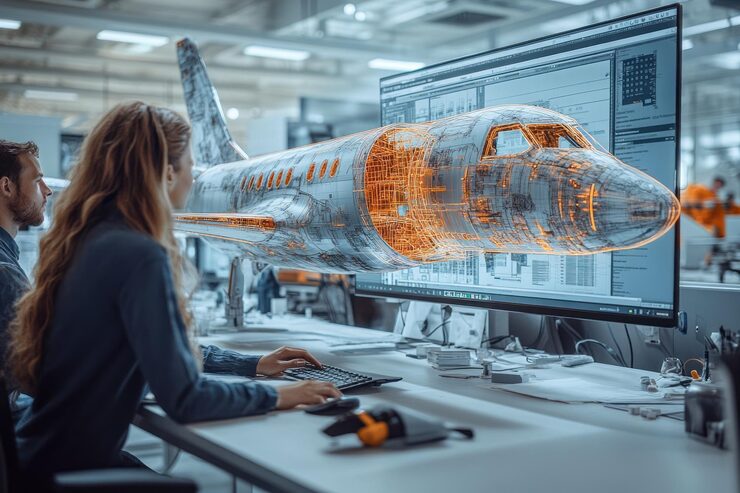

The aviation industry is evolving faster than ever due to advancements in engineering, automation, and digital innovation. One of the most significant developments driving this transformation is aircraft design software. It has revolutionized how engineers conceptualize, model, test, and manufacture aircraft. From simulation to sustainability, these modern digital tools are reshaping aviation’s future and enabling safer, more efficient flights around the globe.
Role of Aircraft Design Software in Aviation Development
Aircraft design software helps engineers move from traditional paper sketches to advanced digital prototypes. It integrates aerodynamics, flight mechanics, and materials science within one cohesive platform. Designers can analyze lift, durability, and performance under multiple simulated conditions before any part is physically built. This reduces cost, design time, and material waste—resulting in more efficient project cycles.
Such software also supports interdisciplinary collaboration. Engineers, aerodynamicists, and manufacturing experts can now work in real time, exchanging updated models through cloud-based systems. This level of collaboration ensures design precision and compliance with international safety standards.
Key Features Driving Technological Efficiency
Modern aircraft design software comes equipped with computational fluid dynamics (CFD), finite element analysis (FEA), and real-time simulation capabilities. CFD allows designers to test how air interacts with aircraft surfaces, improving aerodynamic performance. FEA ensures the structural integrity of aircraft under various stress conditions.
For instance, companies using generative design algorithms can now explore thousands of aircraft configurations automatically. The algorithm suggests optimal solutions that balance performance, weight, and cost efficiency, something impossible through manual design approaches.
Artificial intelligence (AI) and machine learning are also enhancing software adaptability. AI-driven aircraft design software can learn from past projects, predicting potential performance issues early in development. This predictive modeling improves accuracy and shortens innovation timelines.
Boosting Efficiency and Sustainability Through Digital Tools
Sustainability is becoming a critical design factor in aviation. Aircraft design software now enables lightweight material optimization and aerodynamic refinement to reduce fuel consumption. Digital twins—virtual replicas of real aircraft systems—let engineers test environmental factors such as temperature and air pressure without physical prototypes.
By integrating eco-design principles early in the process, aerospace companies can reduce emissions and improve energy efficiency. Moreover, these software systems support recycling-oriented designs, helping the industry meet global green regulations. Sustainable design now extends beyond fuel efficiency to include lifecycle management and waste reduction.
Role in Commercial and Defense Aviation
In commercial aviation, aircraft design software speeds up product development cycles and enhances passenger safety. Airlines and manufacturers use simulation models to predict maintenance needs, improve fuel dynamics, and test comfort-related modifications before implementation.
For the defense sector, such software enables stealth optimization, weapon integration, and performance testing in secure virtual settings. Military engineers can model combat-ready aircraft systems under extreme conditions with accurate simulations. This digital capability reduces strategic risks while maintaining national security standards.
Emerging Trends Shaping Aviation Technology
As aerospace technology evolves, new features are redefining aircraft design software. Cloud-based integration is one of the most notable changes, allowing for decentralized teams to work seamlessly across continents. Cloud-driven platforms also improve file security, scalability, and real-time data tracking.
Another key trend is the use of augmented reality (AR) and virtual reality (VR) in the design process. Engineers can walk through virtual aircraft cabins or test wing load performance in immersive environments. These tools improve decision-making and reduce error rates during prototyping.
Additionally, data-driven Internet of Things (IoT) systems feed real-world performance data back into the software ecosystem. This closed feedback loop ensures continuous optimization even after the aircraft enters service.
Enhancing Collaboration Through Digital Transformation
The concept of aerospace digital transformation has become integral to modern aviation. Aircraft design software lies at the core of this transformation, interlinking modeling platforms, production systems, and maintenance operations.
By digitalizing each phase, aerospace companies minimize human error and improve traceability across the supply chain. This transparency supports compliance with international certification standards and facilitates predictive maintenance.
Collaboration platforms also integrate suppliers, subsystem vendors, and regulatory authorities into one digital environment. This connected structure ensures information consistency, faster approval cycles, and stronger project governance—factors that contribute to global competitiveness.
Case Example: Efficient Design in Action
Consider a mid-size aerospace firm aiming to develop a lightweight commercial jet. By using advanced aircraft design software, engineers start with aerodynamic modeling. They apply CFD analysis to simulate thousands of scenarios that balance lift and drag forces.
Machine learning tools help refine the wing structure based on past test outcomes. Material databases integrated into the program identify aluminum-lithium alloys that lower aircraft weight without sacrificing safety.
Finally, automated cost estimators and production simulations ensure that the final aircraft design remains both commercially viable and regulatory-compliant. The result is a shorter development timeline, reduced resource use, and enhanced performance metrics.

Integration with Manufacturing Technologies
Aircraft design software now integrates seamlessly with Industry 4.0 technologies such as 3D printing and robotics. Once a digital model is validated, it can be directly sent to additive manufacturing systems for prototype creation.
This direct-to-production workflow reduces assembly errors and supports customization. Robotics-driven manufacturing further ensures accuracy and speed in component assembly.
By connecting design and manufacturing stages through automation, aerospace firms achieve synchronized operations with better resource utilization.
Challenges and Future Opportunities
Despite its benefits, implementing aircraft design software requires significant investment and skilled personnel. Training engineers in simulation techniques and data analysis remains a priority. Additionally, cybersecurity concerns around cloud-based design systems must be addressed with robust encryption and continuous monitoring.
Looking forward, the integration of quantum computing could redefine the limits of design analysis. Quantum simulations would allow unprecedented complexity in modeling airflows, materials, and operational behavior at microscopic levels.
Conclusion: Shaping the Skies of Tomorrow
Aircraft design software is more than a technical tool—it’s the foundation of aviation innovation. It empowers engineers to design sustainable, high-performance aircraft with unparalleled accuracy and speed. As aerospace companies embrace IoT, AI, and digital transformation, these systems will continue to shape the industry’s progress.
By combining creativity, science, and technology, aircraft design software sets the aviation world on course for safer, smarter, and more sustainable skies.